
Inicio > lista de programas
Laboratory production Molino de bolas agitadors are great for processing a variety of materials. They are particularly useful in the manufacturing of a wide range of ceramic, chemical, and pharmaceutical products. Moreover, they can be used for recycling material, re-crystallizing powders, and grinding a variety of ores. There are some important factors that need to be considered when selecting a ball mill for laboratory use. These include particle size distribution, recycled material, and the rotational speed of the stirrer.
A molino a escala de laboratorio is a crucial component to a research laboratory. They can reduce materials to a fine powder and are a good way to get a representative sample of the material being studied. These are also capable of making dry or wet products.
There are many different types of lab mills. In order to decide on which one is best for your needs, you'll want to consider several factors. For starters, you'll want to decide on the type of material you're dealing with. You'll have a better idea of which mill will be suitable for your application.
Another consideration is the speed at which the mill operates. High-speed attrition mills are able to produce fine powders at an impressive rate. Although they cost more, their longevity is also a benefit.
The mill is often accompanied by a variety of accessories and options. These include full or narrow discharge housings, drive trains for large or small horsepower equipment, and a motor mounted air brake. Some attrition mills even feature a bag emptying system.
To be sure, you'll have to decide whether you're interested in dry or wet grinding. If you're looking for a closed grinding process loop, you'll want to choose a model with a high-quality stainless steel tank and a pumping circulation system.
Regardless of your specific needs, you'll find that an attrition mill has the ability to provide you with the quality performance you need. Using one is the best way to get accurate test results. Of course, you'll want to take proper care of your unit to ensure that you can count on it for years to come.

molino de bolas planetarios are highly useful laboratory equipment for size reduction, mixing and dispersion. They are also used for preparing nanometer-sized particles. They are available in different sizes ranging from 20 liters to 100 liters. Typically, they consist of two or four bowls, which are connected by a turn disc.
Planetary ball mills are widely used in many fields, including environmental protection, chemistry, electrical industry and medicine. These ball mills have high efficiency, low noise and good workmanship. Moreover, they are very compact. In addition, they have a one-way direction.
Planetary ball mills are suitable for grinding various types of materials, such as ceramics, metal oxides, polymers and many others. A single machine can grind four different types of powder samples. The granularity of the output powder can be reached to 0.1mm.
Planetary ball mills are equipped with thick steel sheets for impact resistance and strength. In addition, they come with pneumatic lifting arrangement or sliding door arrangements. This means that they are safe to operate and can be installed in any operating mode.
Planetary ball mills can be used to grind all types of materials. Their high pulverization energy enables them to produce small and fine particles. At the same time, their centrifugal force is very strong. Consequently, the grinding process is very short. Furthermore, they can achieve a high degree of size reduction. Moreover, they can be equipped with vacuum ball mill tanks, which can provide the sample under vacuum.
The Planetary Ball Mill PM 100 is a powerful benchtop model. It is extremely easy to use and has an adjustable counterweight. Moreover, it can compensate for the maximum vibrations and minimize frictional forces. Using this model, you can grind 220 ml of sample material per batch.

In a laboratory production Molino de bolas de agitación de laboratorio, the size of the grinding beads and the speed at which the stirrer rotates both have a significant impact on how well the grinding process goes. We looked into the relative importance of several variables. We specifically looked at how various characteristics affected both the total size of the product and the amount of energy used. As a result, we discovered the stirred media mill's main performance metrics.
First, we looked at how stress energy were distributed throughout the axial and circumferential axes of the grinding chamber. According to our findings, the stirrer disc's vicinity was where the greatest strains were found. This occurred as a result of the centrifugal force's concentration of the grinding media in the grinding chamber's outside region.
Second, we determined the grinding media's normalized mean velocity. Average velocity in the first layer of the grinding chamber was at least 20% of stirrer tip speed. The average velocity for slower speeds was 18% of the rotor circumferential speed. The velocity, however, did not follow the speed of the stirrer tip.
The frequency of grinding media collisions was the next topic of study. We discovered that the local stress energy distributions were heterogeneous by comparing the quantity of collisions for each time interval with the associated stress energy. These distributions had a relationship with the volume.
Finally, we determined the grinding media's radial velocity. For all stirrer speeds, we discovered that the grinding media's radial velocity was essentially constant. Additionally, it was discovered that the initial layer's angular velocity was between 20 and 26 percent of stirrer speed.
In addition, we established the stirrer's power input. The energy input per second increased along with the stirrer speed. However, the largest power input was always detected close to the stirrer disc's outside border.

Laboratory production Molino de bolas de agitación ligera can be sized based on results from test work. The particle size distribution is measured using scanning electron microscopy (SEM) and liquid water vapor. These results can be used to estimate the power required to operate a full-size equipment.
Several studies have examined the power requirements of laboratory mills. However, the relationships between specific energy, contained energy, and media wear rates remain unsolved. There is still a need for more research on these issues.
For example, a comprehensive model linking stress intensity, stress frequency, and specific energy is yet to be developed. This would be helpful in predicting mill performance. However, the derived power models did not appear to apply to full-scale mills. Instead, they merely showed similarities in the specific energy required to break particles.
Some studies showed that pretreatments, such as ultrasonication, are capable of affecting particle size distribution. For example, this method of processing changed the morphology of cellulosic powders. In particular, it reduced the particle size and increased the amount of fines produced.
Linen, a fiber with a multicellular fiber structure, exhibited the largest effects. Its particles shifted to smaller sizes after ultrasonication. The particle size of the original cotton powder did not change significantly after treatment.
Ultrasonication also shifted the peaks of the PSD curve to smaller particle sizes. Moreover, it improved the disintegration of the cellulosic particles. Therefore, the ultrasonication process was a possible solution for improving enzymatic hydrolysis.
Although these experiments are limited in scale and scope, they can be used to estimate the impact of ultrasonication on particle size distribution. It is important to understand that the fractal dimension of the particle size distribution does not always show a sharper picture. A more accurate description of the particle size distribution can be obtained by using a three-section fractal linear fitting curve.
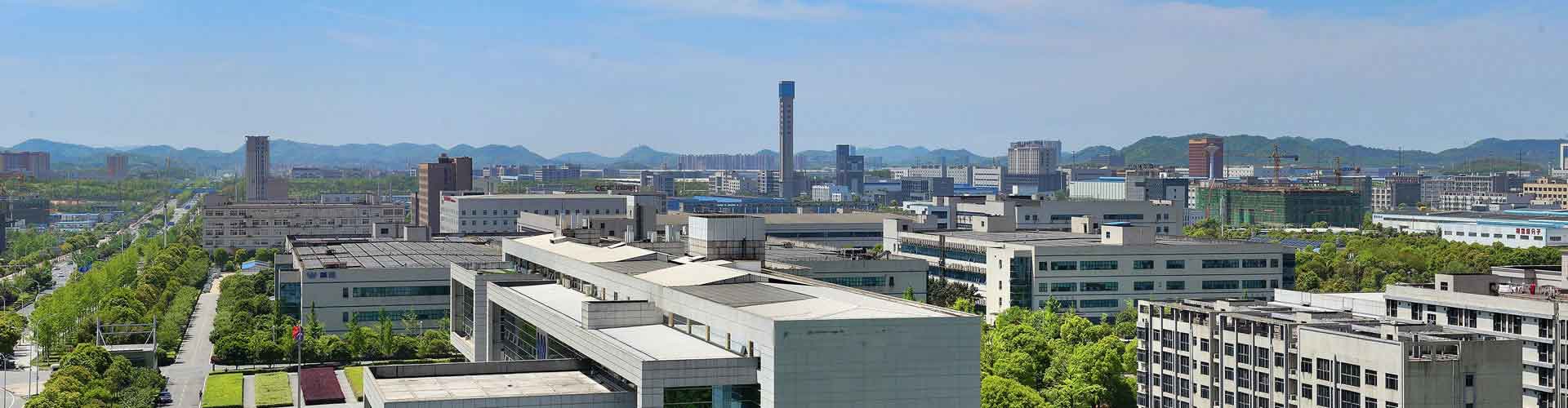
Tencan is a manufacturing center with an area of 22,000 square meters as well as an R&D center of 22,000 square meters.Tencan offers five product lines comprising over 40 models as well as more than 400 varieties of accessories and spare parts, which satisfies all customer's requirements in full terms. Tencan has more than 30 patents and collaborates with 20 doctors from five prestigious universities.
The main business of the company is equipment for powder manufacturing, powder technology or powder materials. Our current products include laboratory planetary mills, crushing, milling machines and mixing, screening and equipment.
The company is accredited with the ISO9001 quality management system and CE, SGS, as well as other system certifications. In addition, it has acquired over 40 patents on core technology that have exclusive intellectual property rights. It is recognized as a "high-tech enterprise in Hunan Province" by the government.
The largest customer groups are research and universities. Alongside providing over 20000 customers, the business exports to more than 60 countries.
Recycling is the process of transforming waste materials into reusable materials. Typically, the recycled material is used to replace virgin materials in production processes. The material can be extracted from sewage sludge, plastic matrix, and even polymer-metal composites.
For recycling of metal-plastic composites, established methods generally rely on waste comminution. Mechanical crushing is typically used to treat electrode scraps. In addition, pyrometallurgy and hydrometallurgy play a significant role.
CreaSolv(r) Process is a promising technique for recycling spent metal-plastic composites. It is particularly suitable for recovery of PBT from polymer-metal composite materials. This technique allows for the economically and technically feasible recycling of composites at small scales.
CreaSolv(r) process parameters included a dissolution time of 60 minutes, exclusion of oxygen, and a dissolution temperature of 190 degC. The Mw of the post-process recycled PBT exhibited a substantial decrease from 4.6 x 10⁴ Da to 2.1 x 10⁴ Da.
This drop occurred because of a higher debinding unit temperature and a longer residence time in the debinding unit. During solvent recovery, the Mw was again reduced.
The CreaSolv(r) Process can be used to recover valuable polymer components, including copper, from spent metal-plastic composites. However, the process's economic feasibility may be an issue for industrial implementation.
Operating costs of a PBT plant include manpower and facilities. To reach break-even point, input would need to be increased to 100 t/year. Assuming a recyclability rate of 95%, the annual input would need to be more than 750 EUR/d.
The CreaSolv(r) process offers an economical option for converting composites into a recyclable and profitable product. Compared with other recycling technologies, it provides an opportunity to reduce the volume of waste. Also, this technique can result in higher redemption prices.
 EN
EN  NL
NL FR
FR DE
DE HI
HI IT
IT KO
KO PL
PL PT
PT RU
RU ES
ES TR
TR AR
AR BG
BG HR
HR CS
CS DA
DA FI
FI EL
EL JA
JA NO
NO RO
RO SV
SV IW
IW ID
ID LV
LV LT
LT SR
SR SK
SK SL
SL UK
UK VI
VI ET
ET HU
HU UZ
UZ TH
TH FA
FA MS
MS BE
BE HY
HY AZ
AZ KA
KA MN
MN MY
MY KK
KK TG
TG


